
New Carbon Monoxide Detector Rules in Ontario
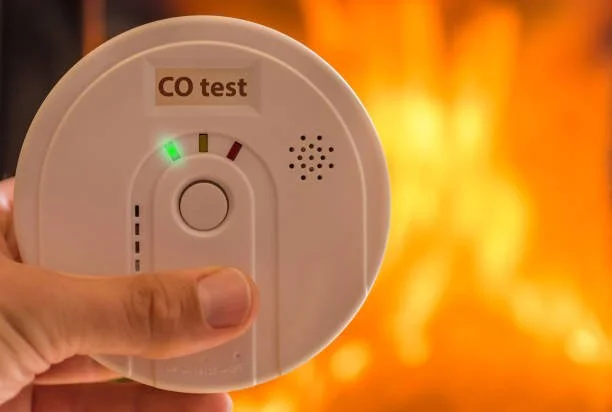
As of January 1st, 2026, the Province of Ontario has updated the regulations regarding carbon monoxide (CO) detectors to enhance residential safety.
Previously, all homes in Ontario with fuel-burning appliances (i.e. natural gas, propane, wood) or attached garages were required by law to have working CO alarms installed only outside sleeping areas. Starting this year, changes to the Ontario Fire Code require a working carbon monoxide alarm to also be located on every level of any residence with a fuel-burning appliance, including (but not limited to) a furnace, water heater, gas stove or wood stove / fireplace. The laws apply to all owner-occupied and rental properties, including cottages and cabins.
Property owners must ensure that CO detectors are properly installed, maintained, and kept in good working order. Tenants or renters are responsible for notifying landlords if their CO alarms are not functioning. Failure to comply with these rules can result in fines. These new requirements are part of ongoing efforts to prevent carbon monoxide poisoning and protect Ontarians in their homes.
Carbon monoxide is an odourless, colourless gas that is produced when fuels such as natural gas, gasoline, oil, propane, wood or coal are burned. At high concentration levels, carbon monoxide reduces the body's ability to absorb oxygen, which can quickly affect brain and organ function and lead to death. The danger is magnified when combustion gases are not properly vented to the outside.
People exposed to carbon monoxide often experience flu-like symptoms along with fatigue, shortness of breath and impaired motor functions. Depending on the concentration, carbon monoxide can cause unconsciousness quickly, and death can occur within minutes.
According to the Ontario Association of Fire Chiefs, carbon monoxide poisoning causes, on average, more than 50 deaths a year in Canada. Most of the victims died while sleeping and nearly two-thirds of carbon monoxide poisonings happened during the colder seasons of fall and winter.
While a carbon monoxide detector is the best defence against accidental poisoning, Matt Hepditch, a deputy chief with the London, Ontario fire department said it's common for London fire inspectors to find both carbon monoxide and smoke alarms not working correctly or not installed at all. "I would say we run into that on a daily basis, unfortunately," he said.
The holidays are a good time to test smoke and carbon monoxide alarms. Each alarm should be checked to ensure the batteries are still good. Models also have a set lifespan, and older models may need to be replaced, regardless of working condition. For cottagers who close their buildings for the winter, it is recommended to test your alarms and replace batteries the first time you arrive in the spring.
Alarms can be powered by a battery or hard-wired with a battery backup. There are also models that can be plugged into any standard electrical outlet. Some models are also dual-function alarms, with the ability to detect both carbon monoxide and smoke. Alarms should be certified for use in Canada, with a logo of the Canadian Standards Association (CSA) or Underwriters Laboratories of Canada (ULC) and can be bought at any hardware or general supply store.
For more information on Carbon Monoxide safety, here is a link to the Province of Ontario website https://www.ontario.ca/page/carbon-monoxide-safety
(Credit to a news story on the CBC.ca website by reporter Andrew Lupton)
This article was written by CLA Board Member, Bruce Sanderson for the 2026 Winter/Spring Newsletter